
Commercial floors are working surfaces. They may carry employees, customers, carts, equipment, deliveries and repeated cleaning throughout the week. Unfinished or deteriorating concrete can create dust, absorb spills and make a facility look poorly maintained. Apache Junction Epoxy Flooring provides commercial epoxy flooring options for businesses in Apache Junction, Arizona, with system selection guided by the slab, traffic, cleaning routine, safety requirements and operational schedule. The right coating is not simply the toughest product available; it is the system that fits the facility's actual demands and can be installed and maintained responsibly.

What Commercial Epoxy Flooring Provides
Commercial epoxy flooring is a resin-based coating system applied to prepared concrete. Depending on the specification, it may be a thin protective coating, a higher-build system, a decorative finish or part of a multi-layer floor assembly. Epoxy can offer good adhesion and resistance to many forms of abrasion and chemical exposure, but performance depends on the exact formulation and thickness. A facility should define its exposure before selecting a system: ordinary foot traffic is different from forklift movement, thermal shock, aggressive chemicals or frequent washdown.
Businesses and Applications
Potential applications include retail back rooms, showrooms, offices with exposed concrete, service bays, workshops, storage areas and selected light-industrial spaces. Food preparation, healthcare, laboratories and other regulated or hygiene-sensitive environments may require specialized systems and documented compliance beyond a general epoxy floor. The facility manager should identify cleaning chemicals, temperature changes, drainage, slip-resistance needs and any industry standards that apply. A coating contractor should be clear about whether the proposed product is appropriate for the intended use.
Business Benefits
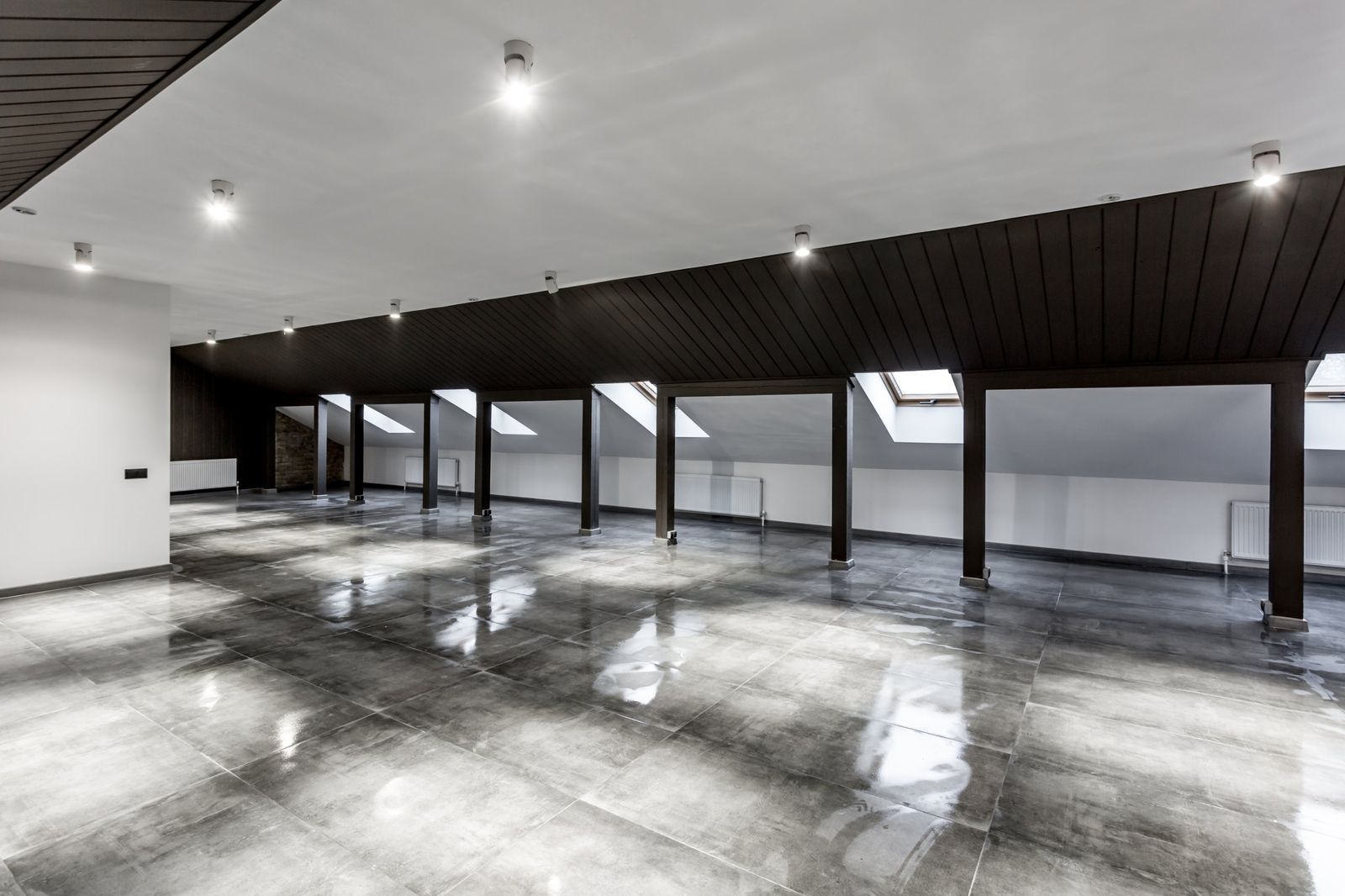
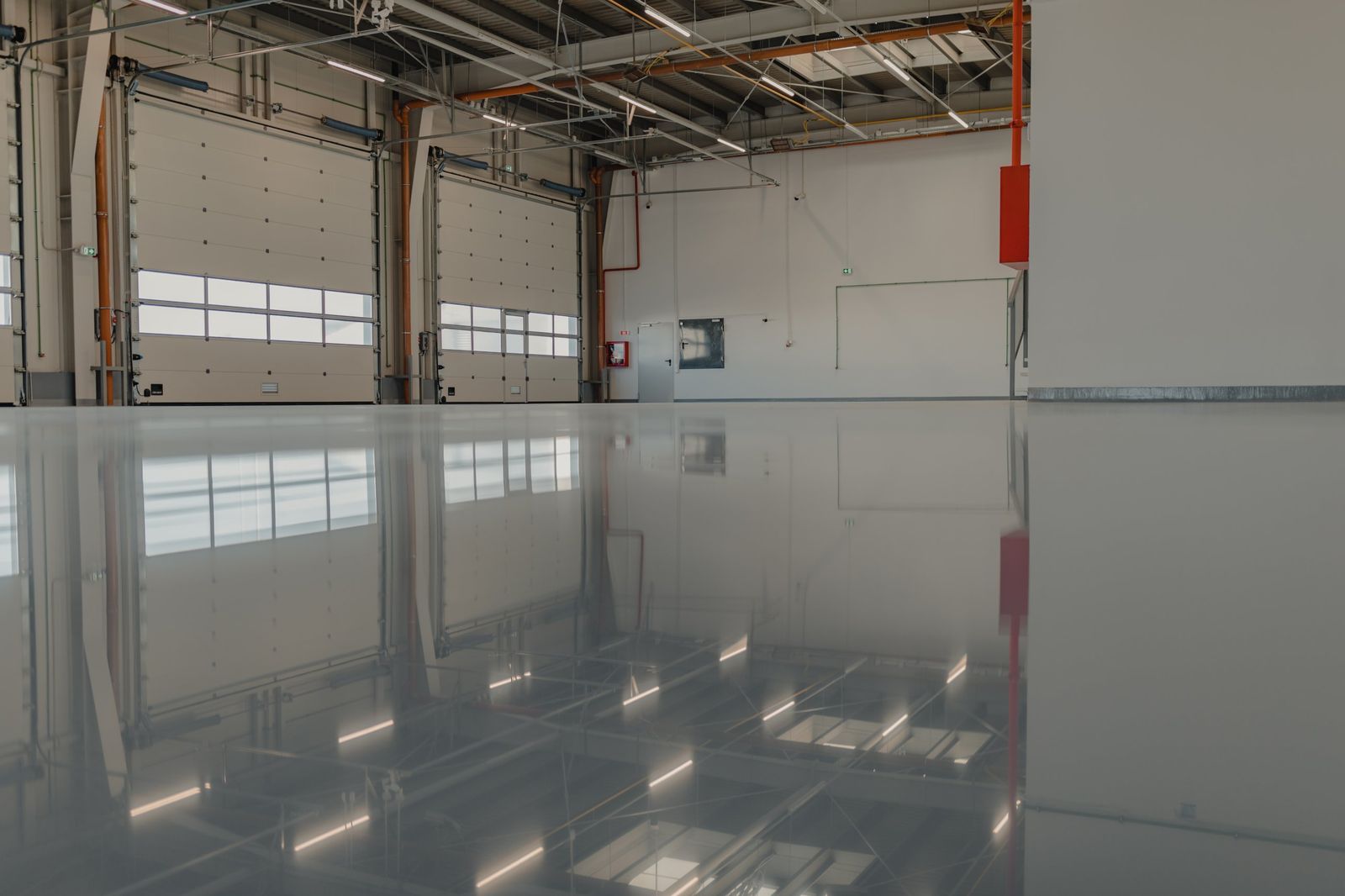
A well-chosen coating can reduce concrete dust, simplify cleaning, improve appearance and help protect the slab from routine abrasion and selected spills. A consistent finish can also support a more organized presentation for customers and staff. Color zoning may help distinguish work areas or walkways when designed and maintained appropriately. Coatings are not substitutes for housekeeping, proper drainage or safety procedures. A smooth finish may not provide adequate traction in wet or oily conditions, so the texture and cleaning regime need to be planned together.
System Selection: Epoxy, Polyurea and Polyaspartic
Epoxy is often selected for its adhesion and ability to build a durable film. Polyurea systems can cure quickly and may offer flexibility, though application windows can be short and products vary significantly. Polyaspartic topcoats are valued for fast cure and UV stability in appropriate formulations. Some commercial projects combine these chemistries in a layered system. Selection should account for concrete condition, moisture, UV exposure, chemical contact, traffic load, cure schedule and manufacturer recommendations. Do not compare bids solely by the generic label 'epoxy.' Planning Around Business Operations Downtime can be as important as the coating itself. Before work begins, define which areas can close, how materials and staff will be routed, and whether the project can be staged in phases. Rapid-cure products may shorten certain waiting periods, but fast cure does not eliminate surface preparation, repair time or the need to meet reopening criteria. Odor, ventilation, access restrictions and cure conditions should be discussed with building management. A written schedule helps prevent premature traffic that can damage the finish.
Inspection and Surface Preparation
The contractor should inspect concrete strength, previous coatings, cracks, joints, spalls, contamination and moisture conditions. Mechanical preparation is commonly used to remove weak surface material and establish a suitable profile. Oil or chemical contamination may require specific treatment; simply coating over it risks adhesion failure. Cracks and joints need an appropriate repair strategy, with movement joints treated according to their function. Moisture testing may identify the need for a compatible mitigation system. The preparation specification should be part of the written proposal.

Typical Installation Sequence
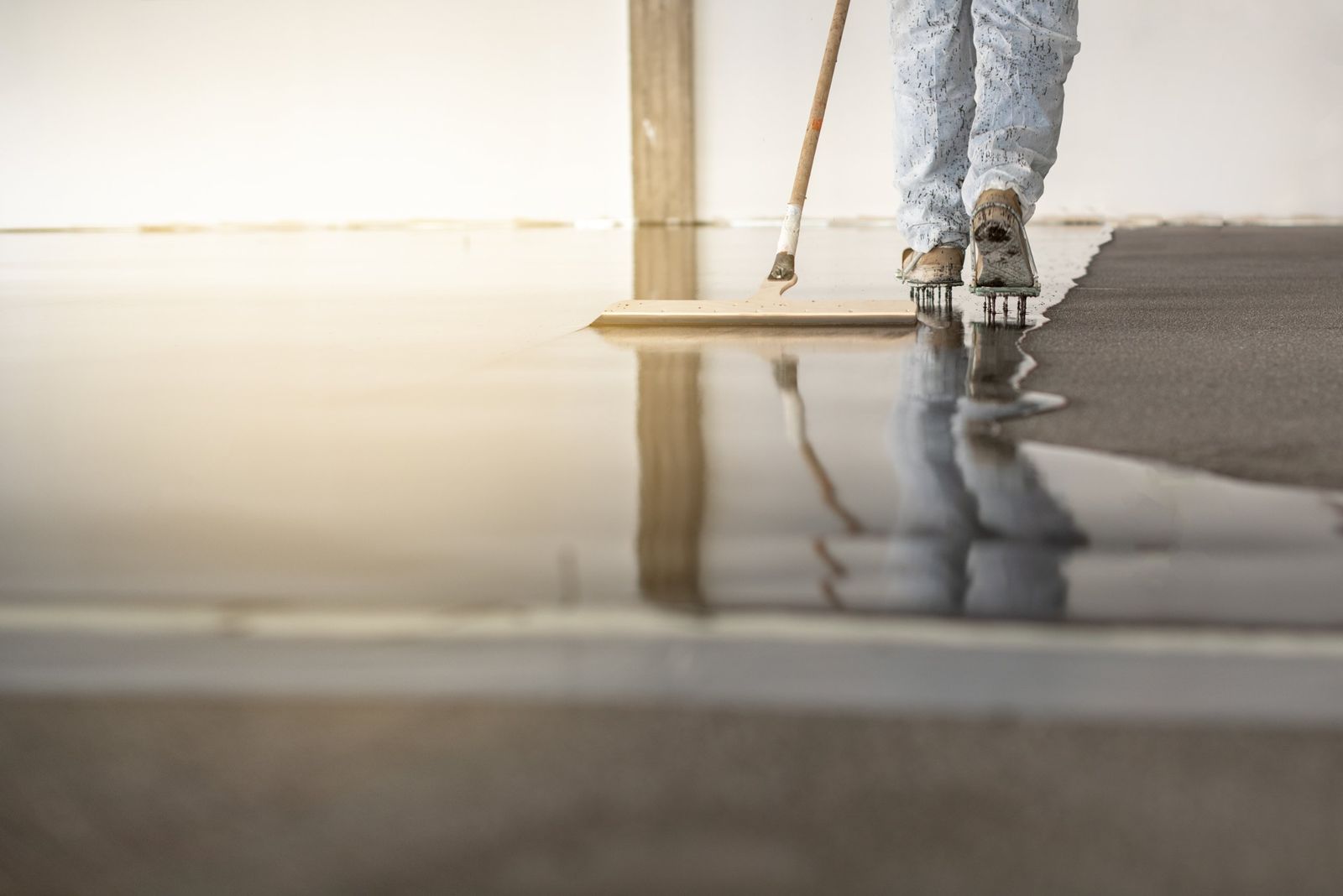
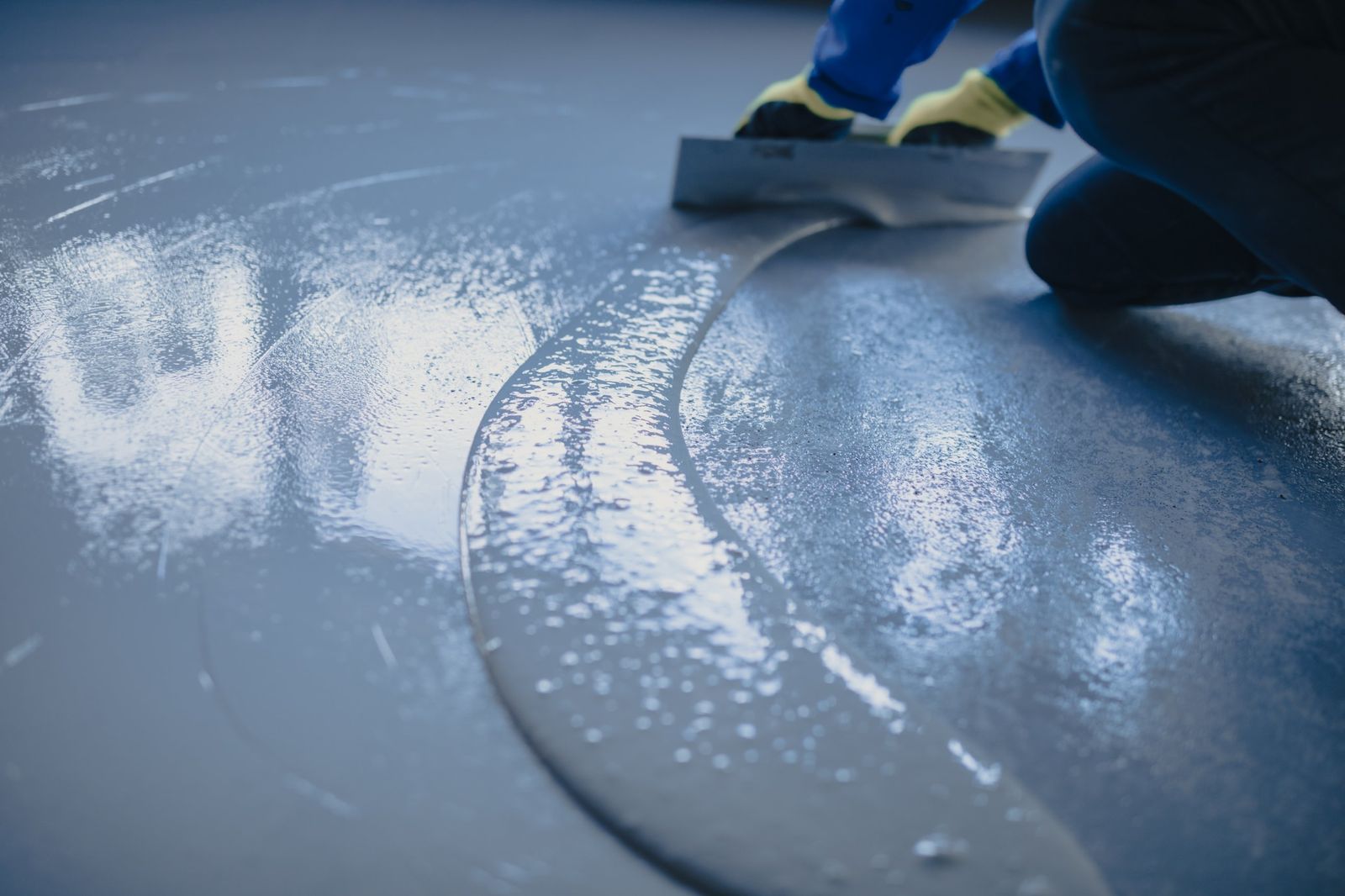
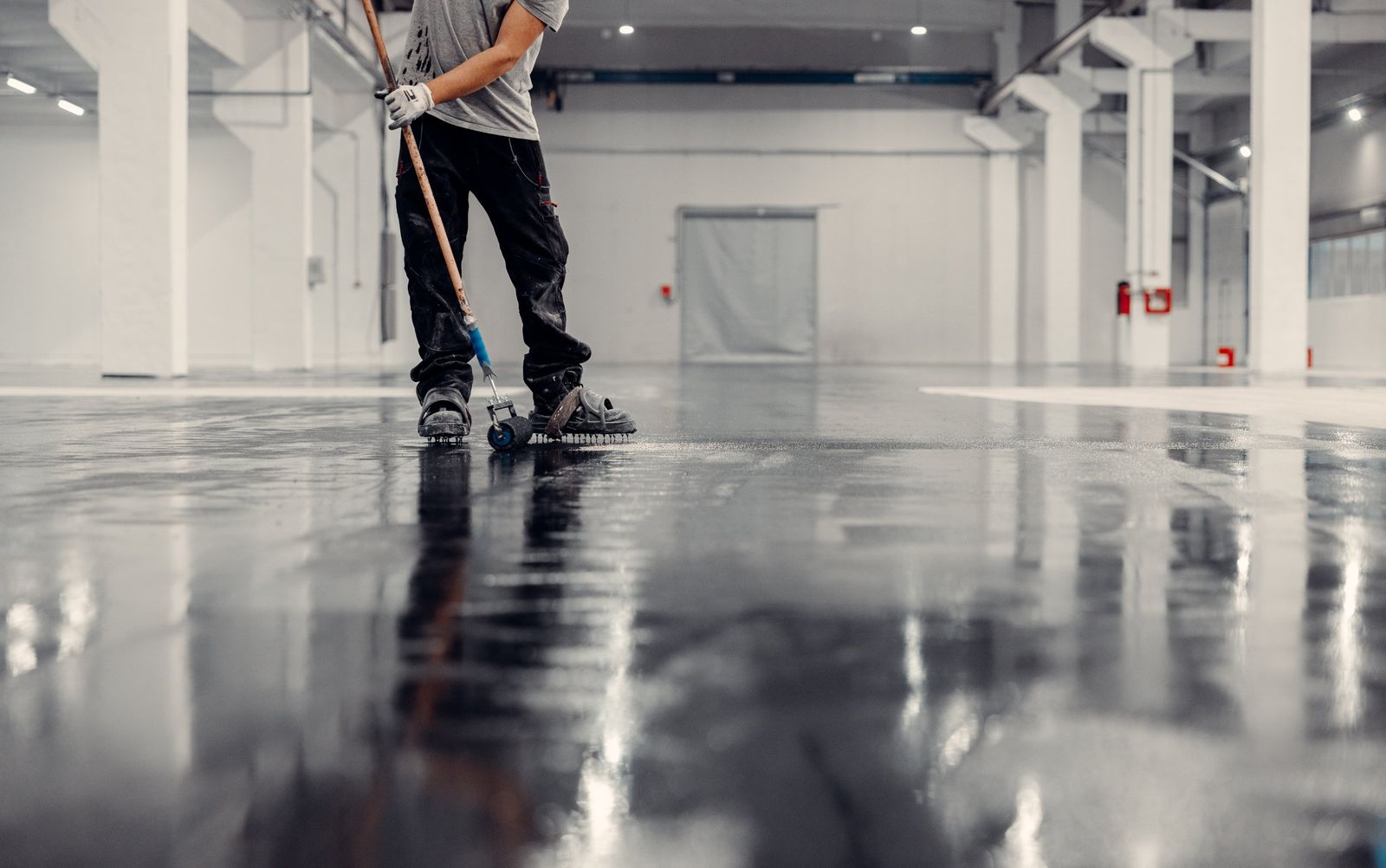
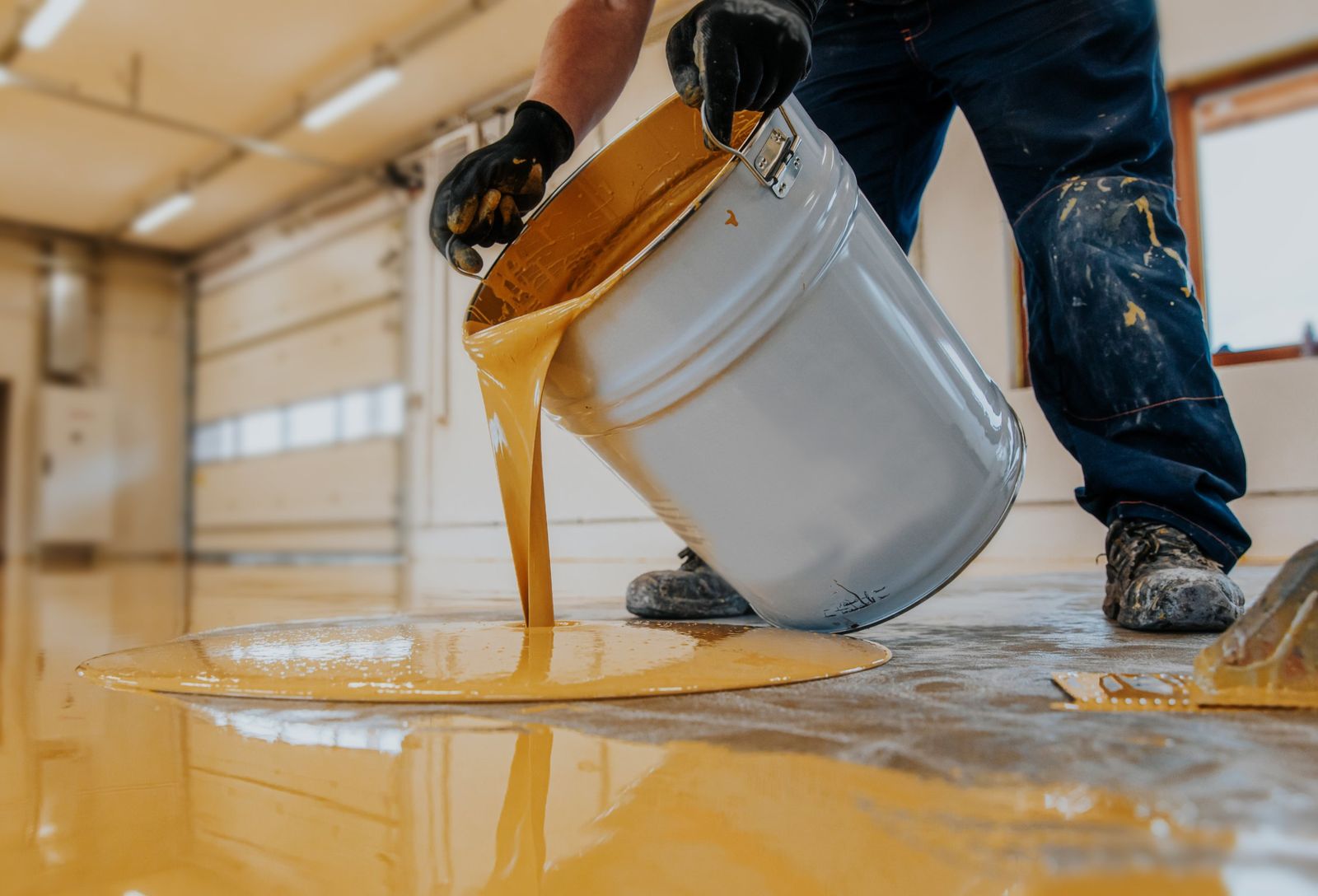
A commercial project generally begins with site evaluation, measurements, operating requirements and a written scope. The area is cleared or isolated, incompatible coatings are removed, concrete is mechanically prepared and dust is collected. Repairs and moisture mitigation are completed where specified. Primer or base coat is applied at the required coverage, followed by broadcast aggregate, decorative flakes or other layers if included. A compatible topcoat seals the system. The installer documents cure restrictions and the criteria for returning the area to service.
Safety, Slip Resistance and Maintenance
Floor safety depends on the complete environment, not a coating alone. Water, oils, dust, slope, footwear and cleaning practices influence traction. Anti-slip aggregate or textured finishes may help, but texture can also make cleaning more demanding. Facility managers should discuss the actual contaminants and washdown frequency before choosing a surface. Establish a maintenance plan for sweeping, compatible cleaning products, spill response and periodic inspection. Damaged areas should be repaired so the concrete beneath is not exposed to further deterioration.
Choosing a Commercial Coating Contractor
Ask for a product-specific scope and evidence that the contractor understands the facility's traffic and exposure. The proposal should describe preparation equipment, concrete profile, repairs, moisture testing, coating layers, expected thickness, cure restrictions and maintenance requirements. Clarify how work will be phased and who coordinates site access. For specialized environments, ask whether the product documentation supports the intended service. Compare total scope and disruption, not only price per square foot.
Why Apache Junction Epoxy Flooring
Apache Junction Epoxy Flooring can help local property owners and businesses explore concrete coating options for commercial spaces. The first step is a conversation about how the floor functions, what the current slab looks like and how much downtime the business can accommodate. A useful estimate should make the proposed system and preparation requirements understandable, so the customer can compare options with realistic expectations. Contact Apache Junction Epoxy Flooring to discuss a commercial floor coating project in Apache Junction.
Frequently asked questions
How do I choose epoxy flooring for a business?
Start with traffic, chemical exposure, cleaning methods, traction, UV exposure and downtime. Those requirements determine the appropriate system and preparation.
Can commercial epoxy floors handle forklifts?
Some systems are designed for heavy traffic, but the specification must account for wheel loads, turning, abrasion, slab condition and coating thickness.
How long will the business need to close?
It depends on preparation, repairs, coating chemistry, site conditions and cure requirements. Ask for a phased schedule and written reopening criteria.
Is epoxy suitable for wet commercial areas?
Some systems can be used in wet areas, but drainage, chemical exposure and slip resistance need to be specifically designed.
Can floor coatings help with dust?
A properly installed coating can seal the concrete surface and reduce dust from ordinary surface wear, but deteriorating concrete or moisture problems may need separate treatment.
What should a commercial flooring quote include?
It should identify the system, preparation, repairs, layer build, exclusions, schedule, cure restrictions and maintenance guidance.
Can a commercial floor be color-coded?
Many coating systems offer multiple colors. Color zoning should be planned with signage, lighting, cleaning and safety procedures.
Does every commercial floor need epoxy?
No. The best solution depends on the facility. Polyurea, polyaspartic or other flooring systems may suit particular exposures better.